

Behind the scenes: Social Work students visit Gerald R. Ford Airport
KALAMAZOO, Mich—Students in Western Michigan University’s Social Work with Communities course recently visited Gerald R. Ford International Airport for a behind-the-scenes look at how large-scale community programs are designed to serve the public.
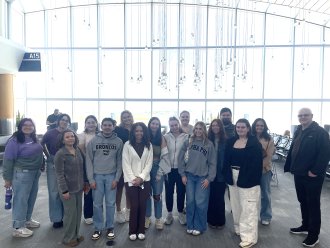
During the visit, students toured the airport’s sensory room, learned about specialized accessibility programs and explored interactive art installations throughout the facility. They also received insight into initiatives such as the Hidden Disabilities Sunflower Program, which supports travelers with nonvisible disabilities.
“Special security clearance and guidance from airport staff provided a rare opportunity to see the planning and operations behind programs that enhance the traveler experience,” said Christopher Hodshire, instructor of the course. “This visit was both educational and inspiring, and it provided meaningful insight into how institutions can thoughtfully respond to diverse community needs through innovation, collaboration and service excellence.”
Senior social work major, Zoe Podvoyski, said the visit highlighted the importance of creating calming spaces for travelers who may feel overstimulated.
“We learn a lot about different mental health disorders and people being overstimulated,” Podvoyski said. “It was nice to see there was a safe space for anyone feeling overwhelmed in the airport.”
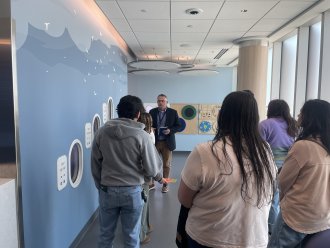
Podvoyski, who plans to pursue a master’s degree in social work at Western and complete an internship in private practice in clinical therapy, said the airport environment demonstrated how thoughtful design can reduce stress.
“I think an environment can lower stress levels, especially with chaotic airports,” she said. “They had beautiful art, furniture and plant displays. It felt homey.”
Joshua Drake, who is completing his bachelor’s degree in social work and plans to pursue a Master of Social Work before entering private practice for therapy and counseling, said the visit showed how community-centered programs can make public spaces more welcoming.
“I think it is beneficial so people can get comfortable with their environment and ease any nerves about flying,” Drake said. “This program has given me a wider range of practices so I am well-rounded and not just focused on individual therapy. Professor Hodshire is really good about getting us out in the community and seeing real-world examples.”