
The State of the WMU College of Arts and Sciences: Achievements, Challenges and Opportunities
On Thursday, April 23, from 3:30 to 5 p.m. in 1303 Dunbar Hall. the College of Arts and Sciences held its annual State of the College address.
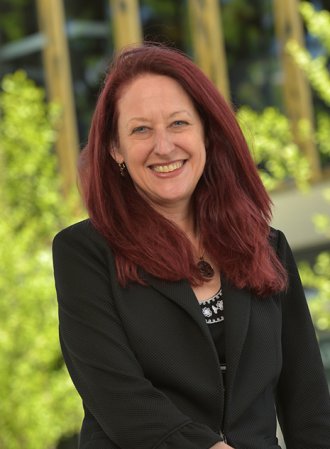
Faculty, staff, students, and community members listened as Dean Koretsky highlighted faculty, student, and staff accomplishments and discussed the current state of the college.
The address covered key topics, including:
- Achievement awards
- Enrollment and budget
- Diversity, equity, and inclusion
- Student success
- Research and creative activities
See below for more detail on what was covered.
Michigan Demographics
Michigan:
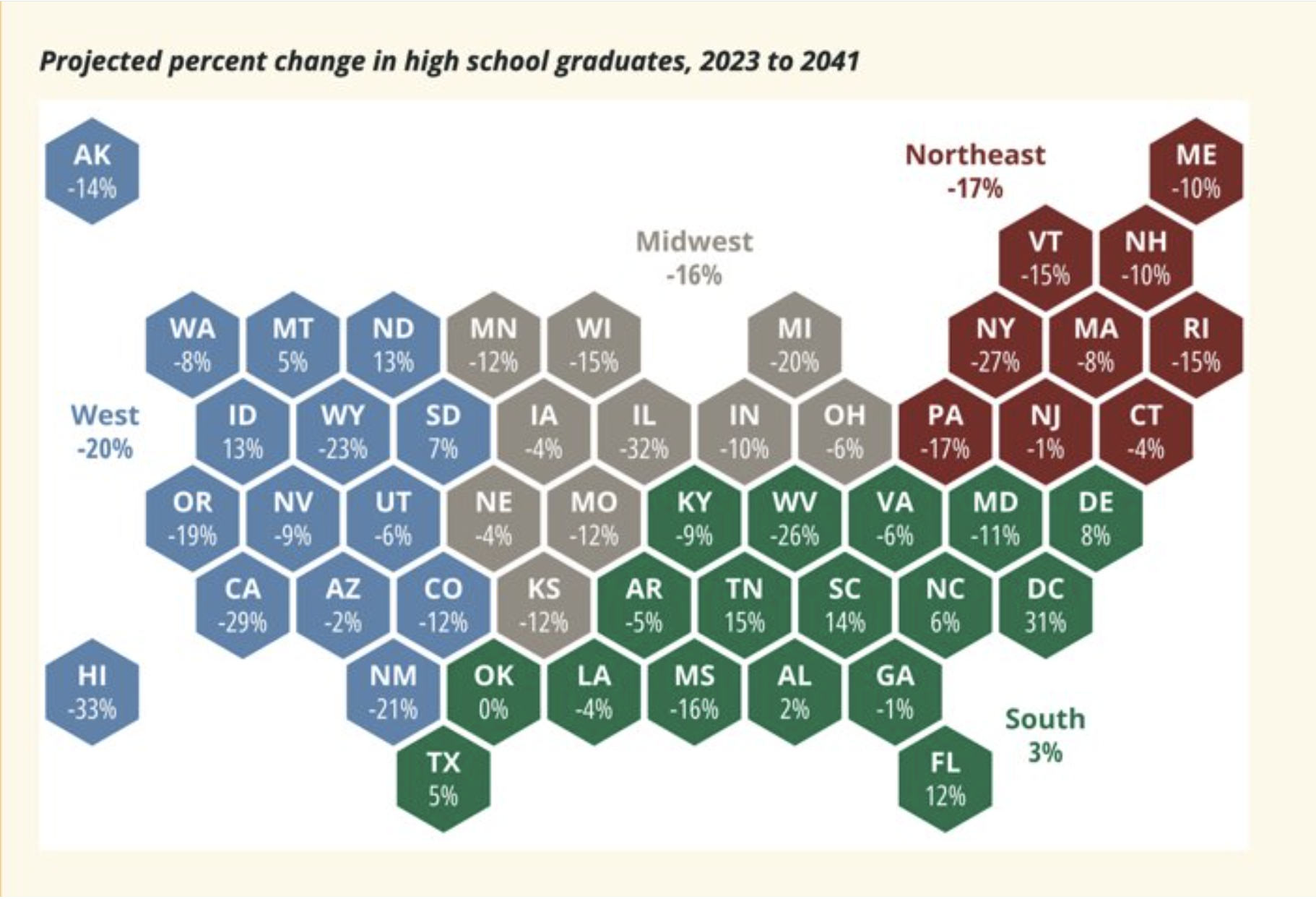
20% projected change in HS grads from 2023 to 2041 (99K in 2023 to 80K in 2041)
Source: Western Interstate Commission for Higher Education, 2024
Actual 10 year change (public HS grads only) 2012-13 to 2022-23: -5.2%
Source: Department ofEducation, Digest of Education Statistics, 2024
Image from wcet.wiche.edu/frontiers/2024
Declining State Support = Rising Cost of Tuition
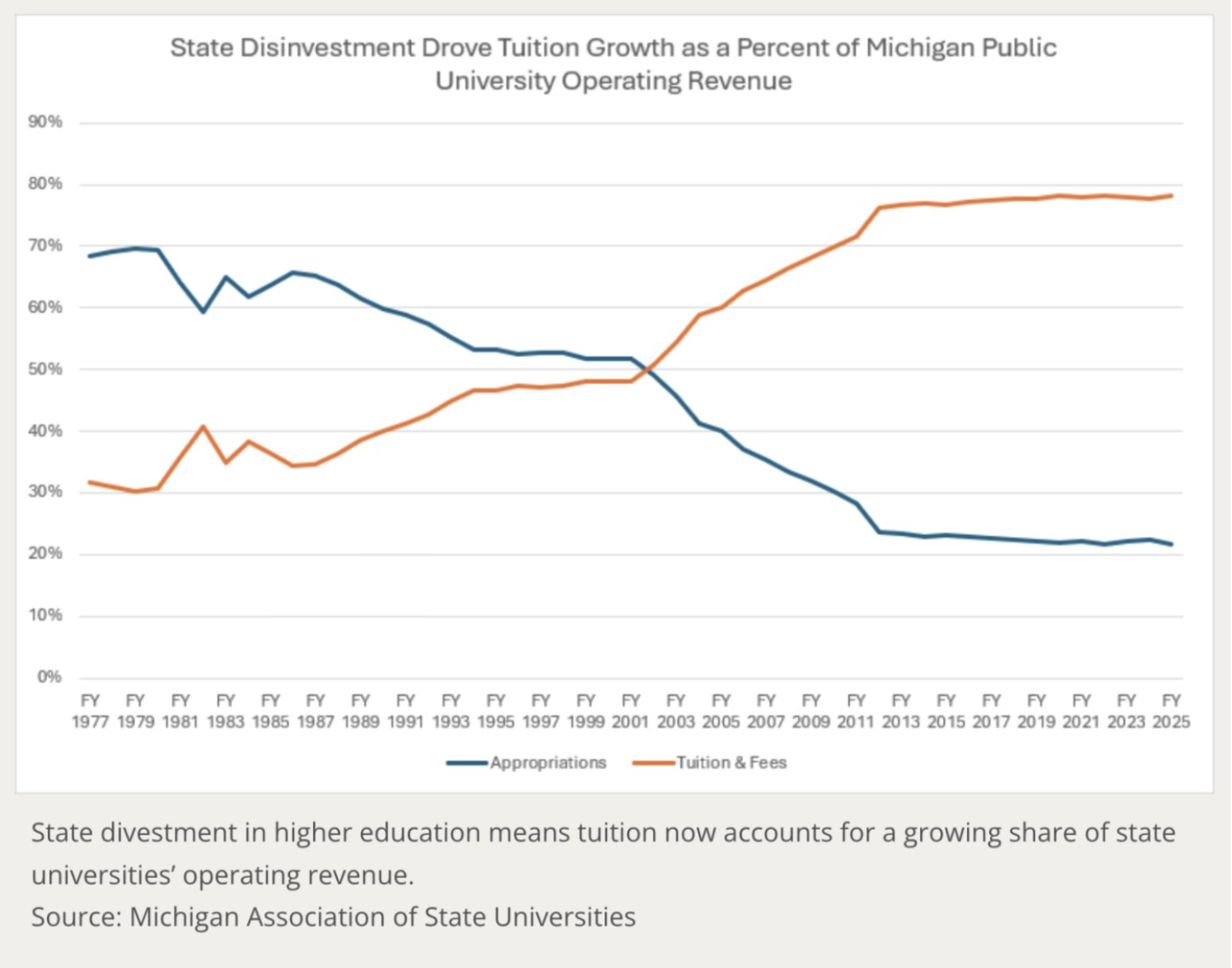
Michigan:
Net tuition is up, but net price as a percentage of household income is declining
MI Achievement Scholarship:
Launched in 2022 for recent HS grads
$5,500/year at publics for up to 5 yrs
In district CC tuition & fees for recent HS grads
Michigan Reconnect (Age 25+):
In district CC tuition
Kalamazoo Promise & Other PromiseScholarships
Source: Bridge Magazine, 2026;
Increasing Competition


WMU Market Share:
First Time Freshman: 7.1% in 2016 to 5.6% in 2025
New Transfers: 10% in 2016 to 6.8% in 2025
Total Headcount: 7.9% in 2016 to 6.9% in 2025
Source: Michigan Association of State Universities
Other Challenges
National Narrative
College is too expensive
Liberal arts not worth the cost
Federal Grant Funding
Programs eliminated
Grants rescinded
Ongoing conversations about F&A
ADA Accessibility
Artificial Intelligence
All WMU Undergraduate Admissions
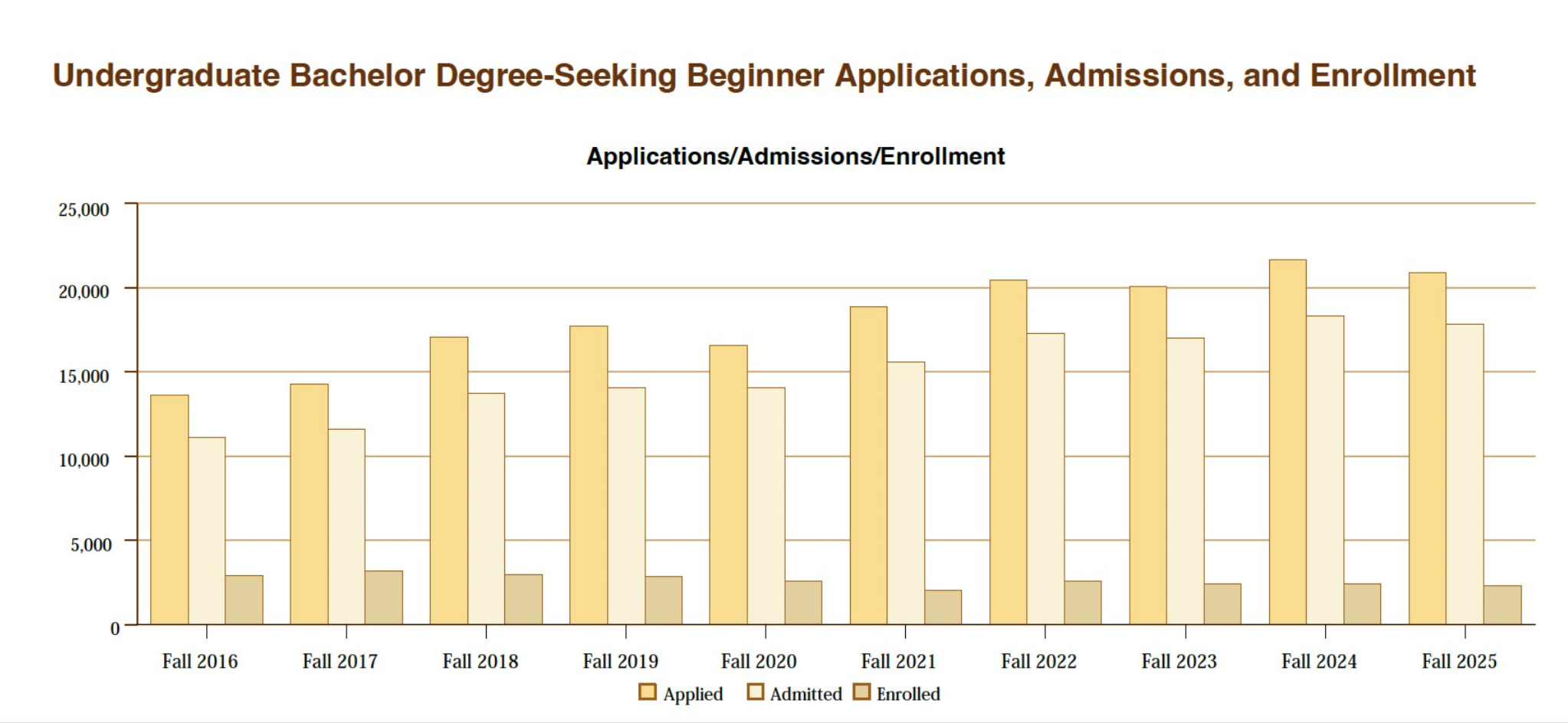
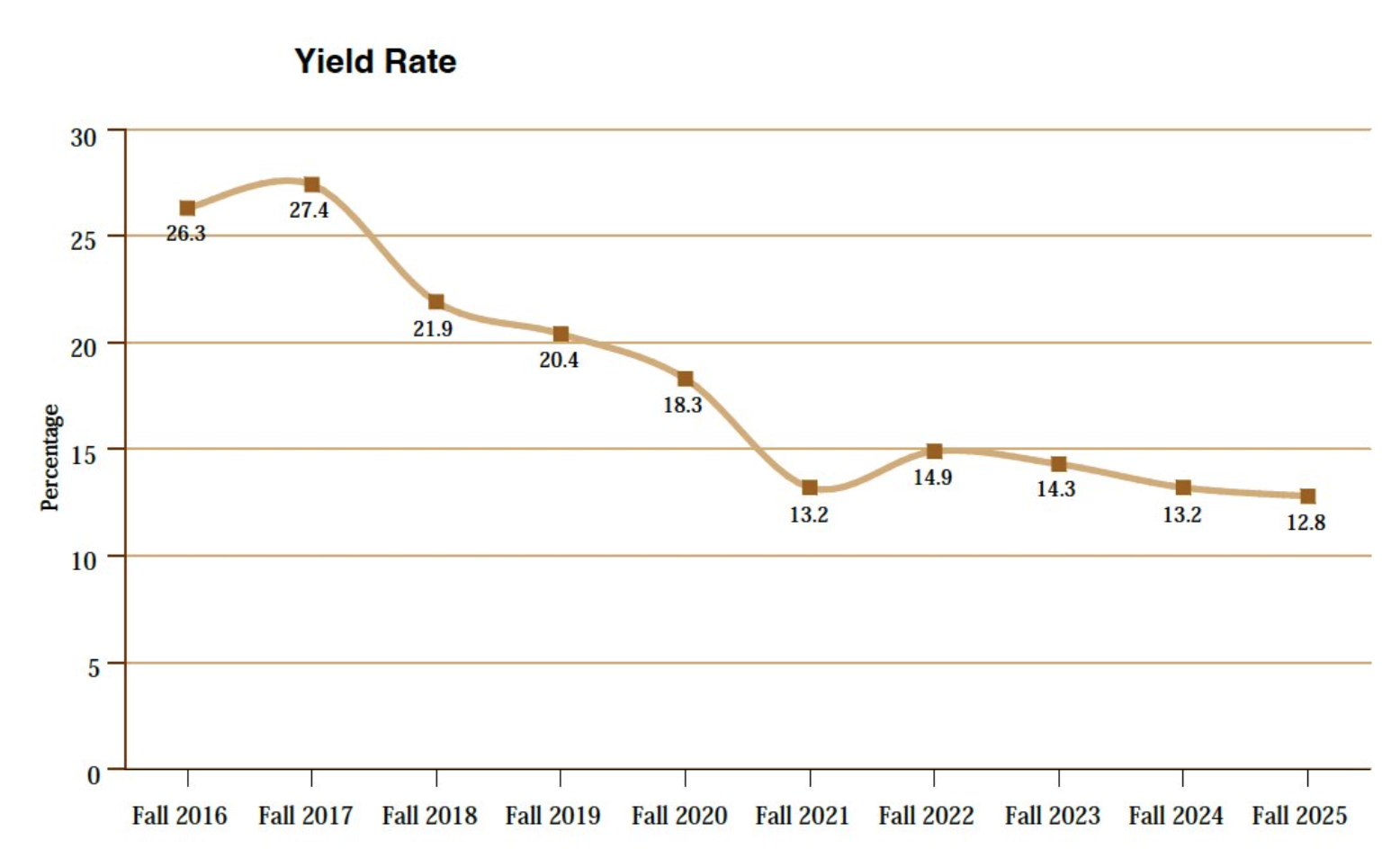
WMU Applications and AdmissionsGenerally Increasing, butEnrollment (Yield) is Decreasing
CAS (WMU) Yield:
2016: 17.4% (26.3% - admitting 81.6%)
2025: 8.7% (12.8% - admitting 85.4%)
MSU Yield:
2016: 32.1% (admitting 66.3%)
2025: 17.8% (admitting 81.3%)
Image sources: WMU Institutional Data
New Beginnings and Transfers
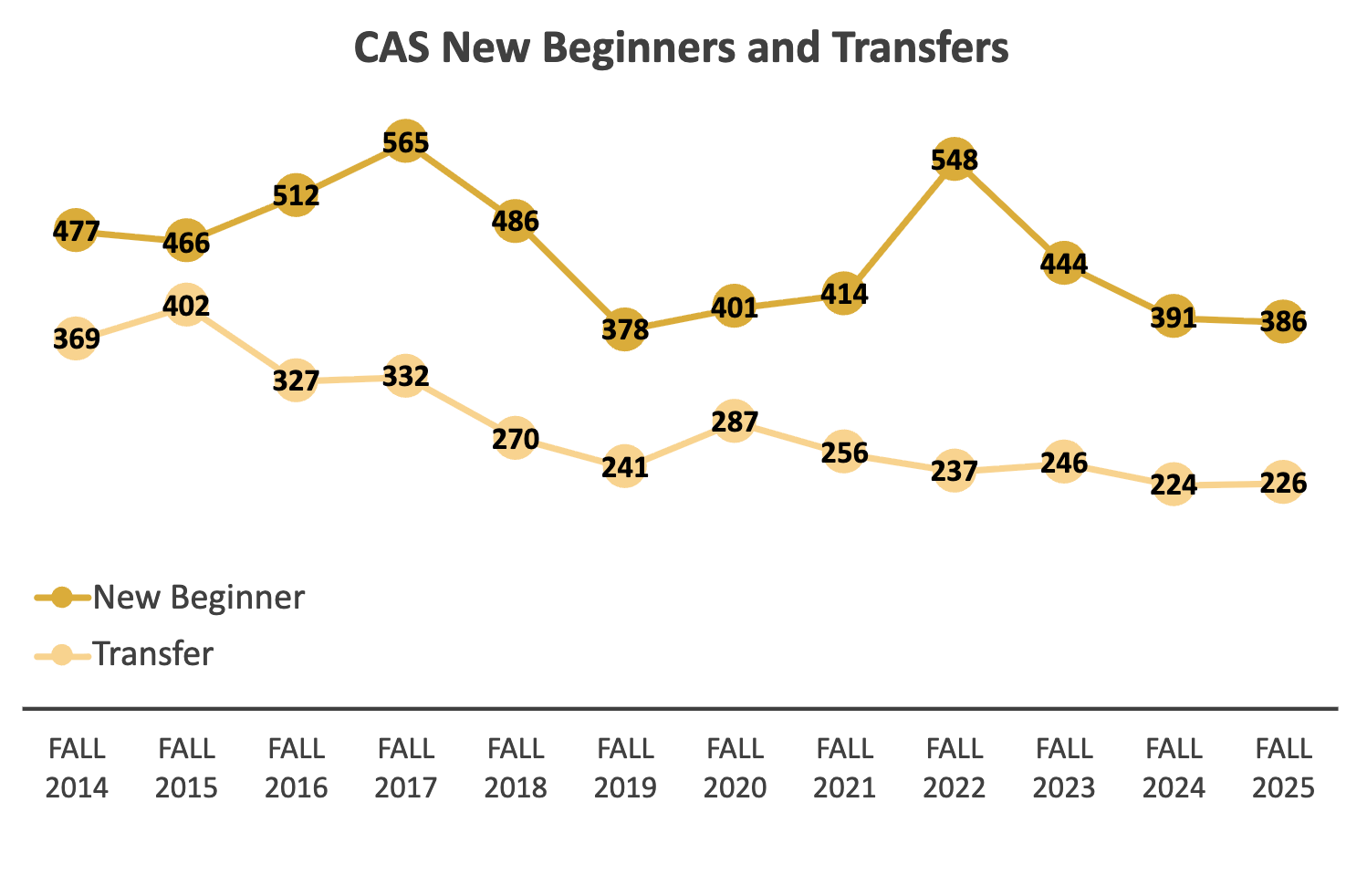
New Beginner =Never attended college after graduating HS and before starting at WMU (including PT students)
Transfer = Earned college credit after graduating HS and before starting at WMU
Note - Spring Not Shown:
Spring Beginner 5 yr Avg Enroll = 9.6
Spring Transfer 5 yr Avg Enroll = 61
Source: WMU Institutional Research
Declining enrollment
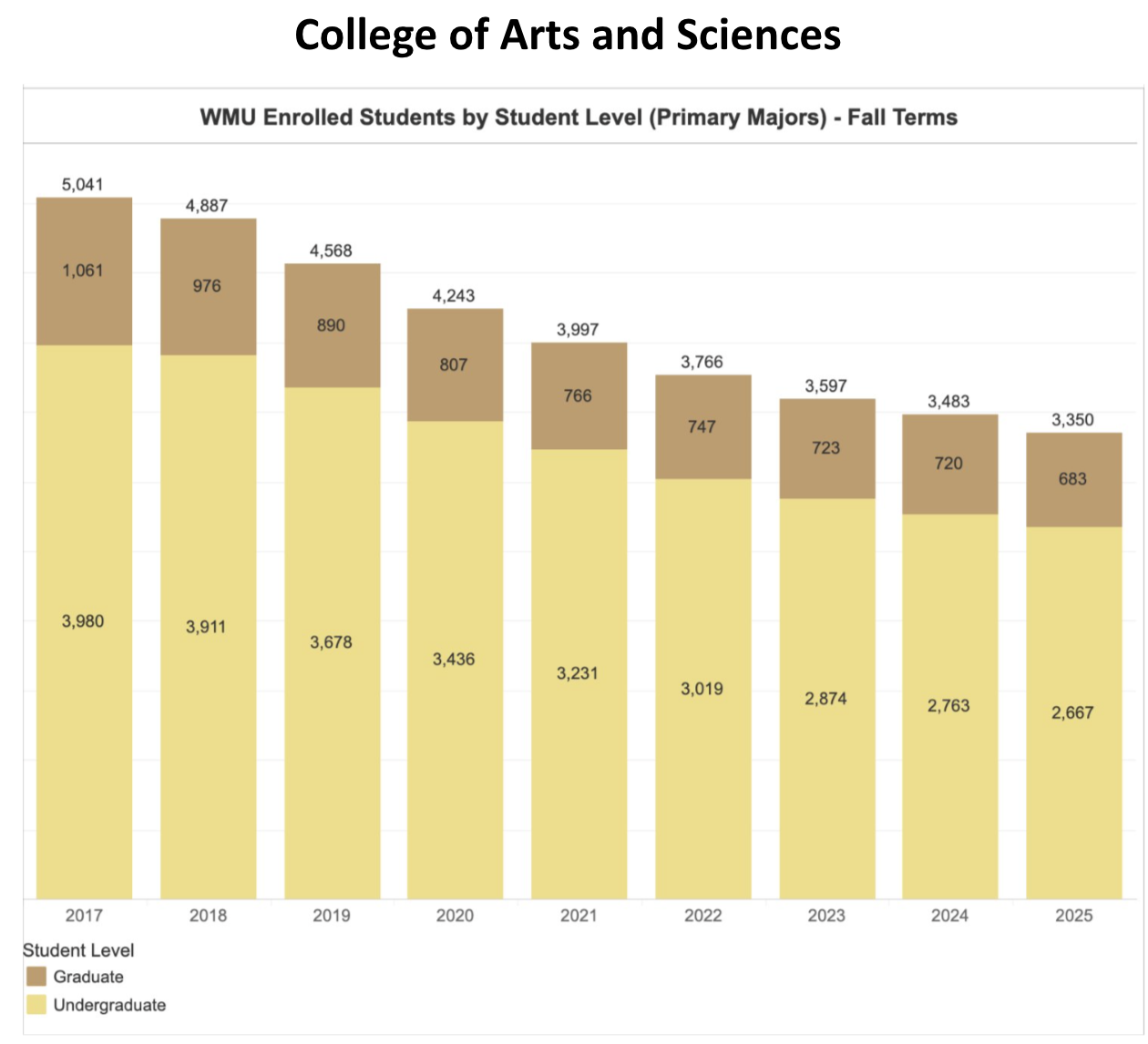
CAS:
1 year change: -3.8%
5 year change: -21%
10 year change: -38%
WMU:
1 year change: -1.6%
5 year change: -15%
10 year change: -26%
Source: WMU Institutional Research
Declining student credit hours
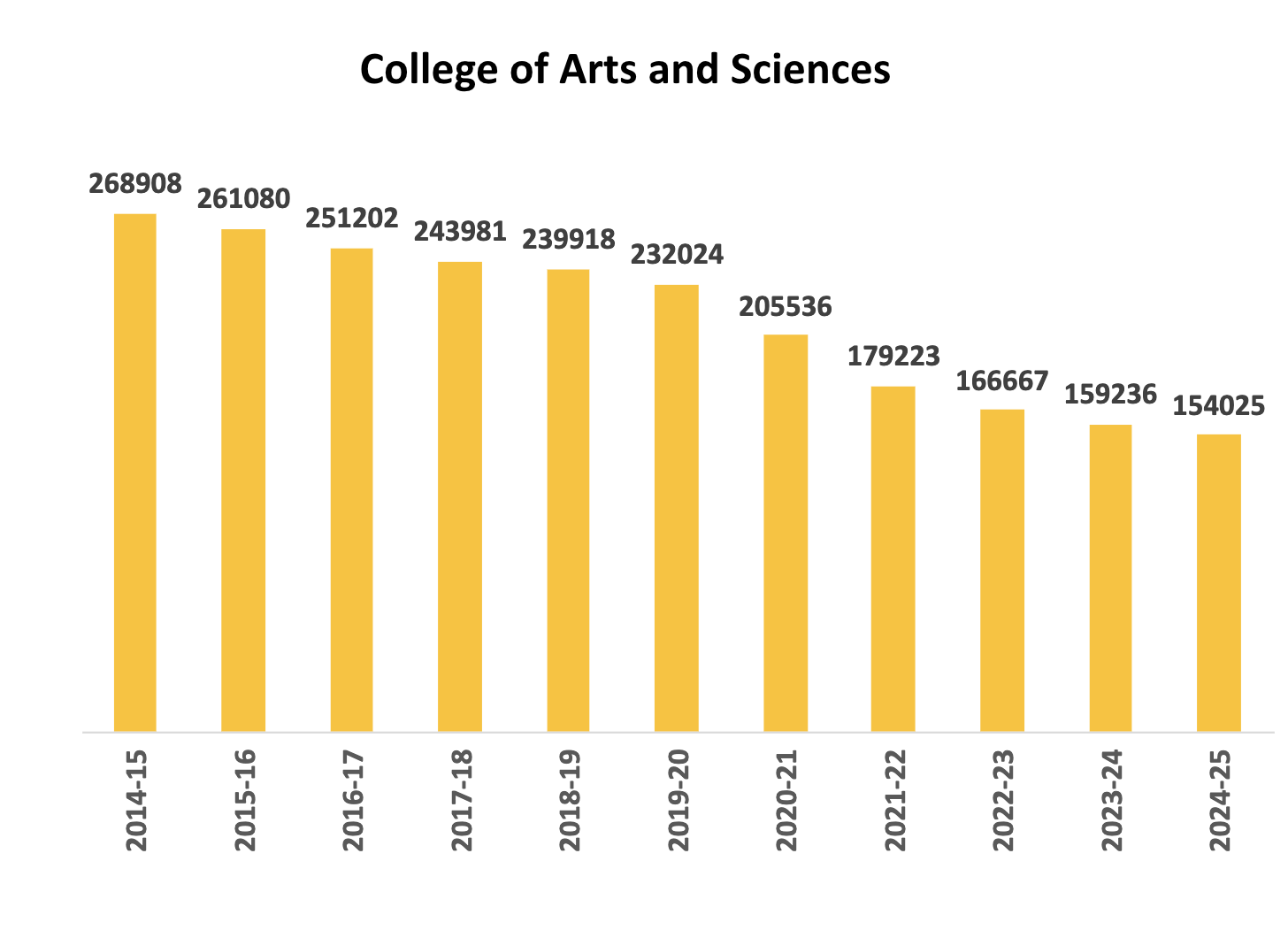
1 year change: -3.3%
5 year change: -34%
10 year change: -43%
Fall 2017:
70% of Gen Ed in CAS
Fall 2025:
56% of WES in CAS
2016-17:
45% of all SCH in CAS
2024-25:
36% of all SCH in CAS
Source: WMU Institutional Research
Retention rates
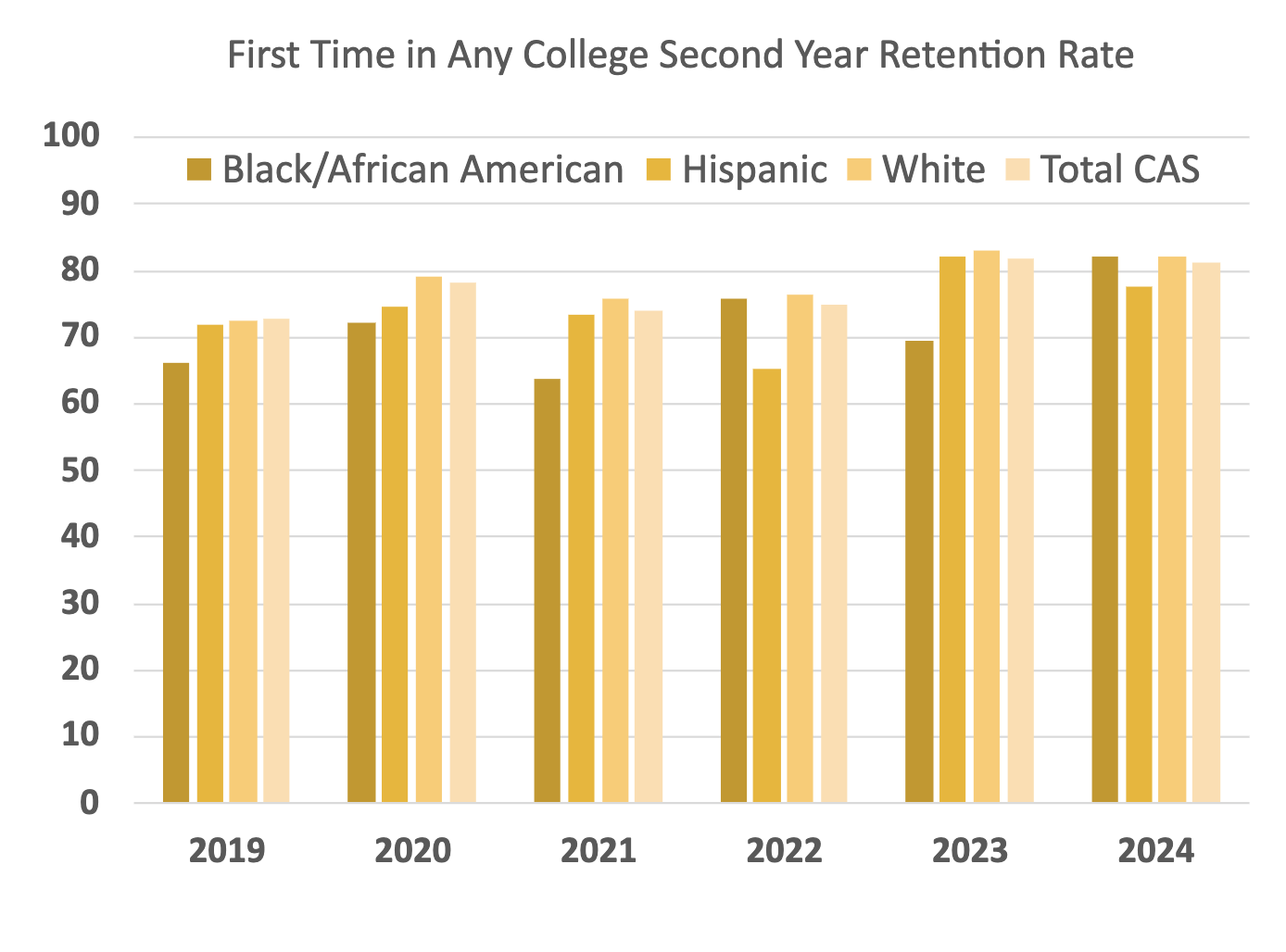
5-Year Average of 2nd Year Retention Rates:
Black/African American: 72.5%
Hispanic: 74.5%
White: 79.2%
All CAS: 77.9%
All WMU: 79.3%
2021 Goal: 80%
Source: WMU Institutional Research
Graduation rates
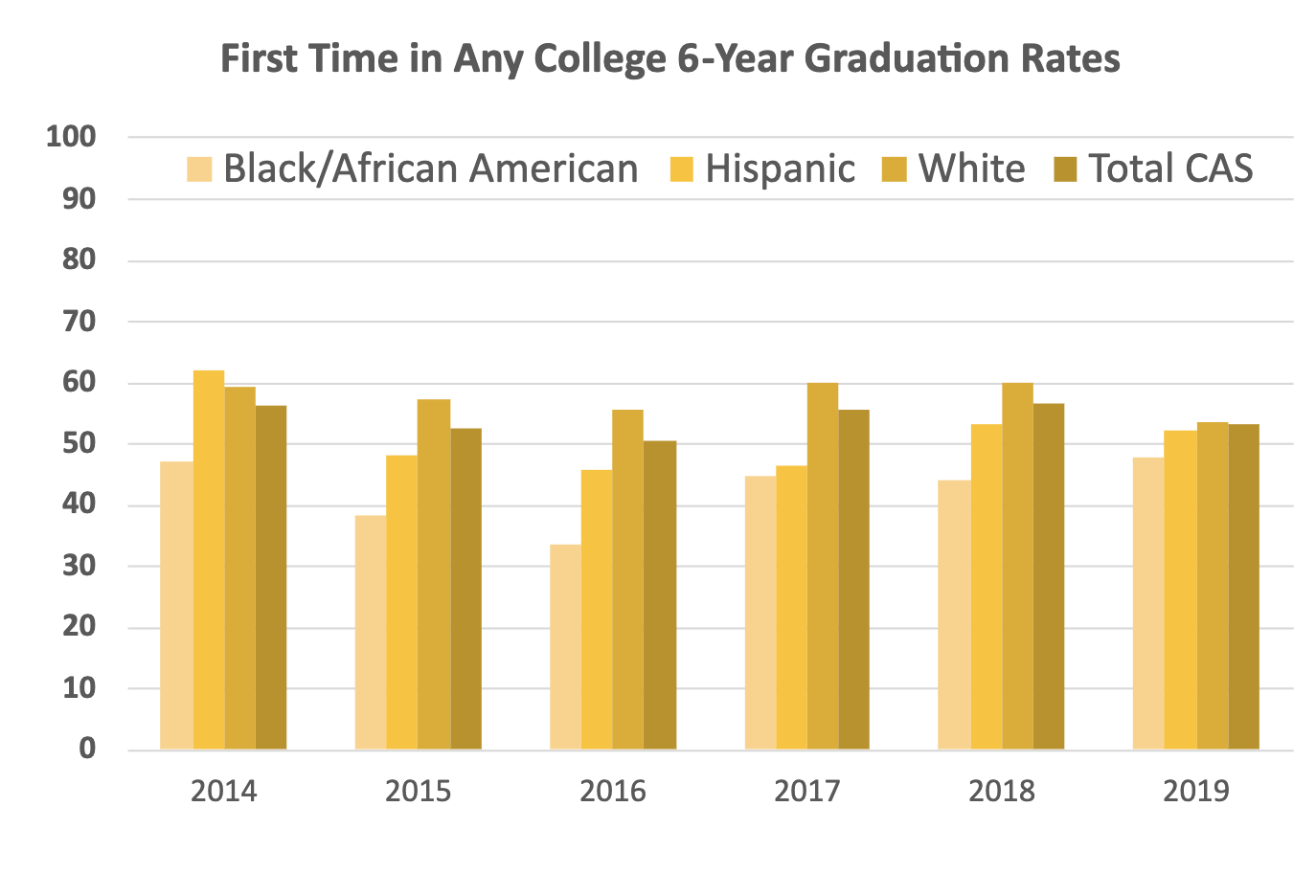
5 Year Average
6-Year Graduation Rates:
Black/African American: 42.4%
Hispanic: 52.2%
White: 57.5%
All CAS: 54.1%
All WMU: 57.1%
2021 Goal: 55%
Source: WMU Institutional Research
Enhancing Engagement & Sense of Belonging — (CAS Strategic Plan Goals 1 & 2)
How can we enhance engagement and create a sense of belonging in every academic unit?
Host academic unit social events and seminar series
Connect students with alumni and emeriti
Develop student advisory boards/include student reps indepartment meetings and conversations
Encourage/support academic unit RSOs
Develop first-year seminar courses

Study Abroad Fair

Commencement celebration

Dean's list celebration

Winter Warm Up: Chili Cook Off and Tabling Event
Expanding Experiential Learning (CAS Strategic Plan Goals 1, 3, & 4)

Cold Case Program (Department of Sociology)
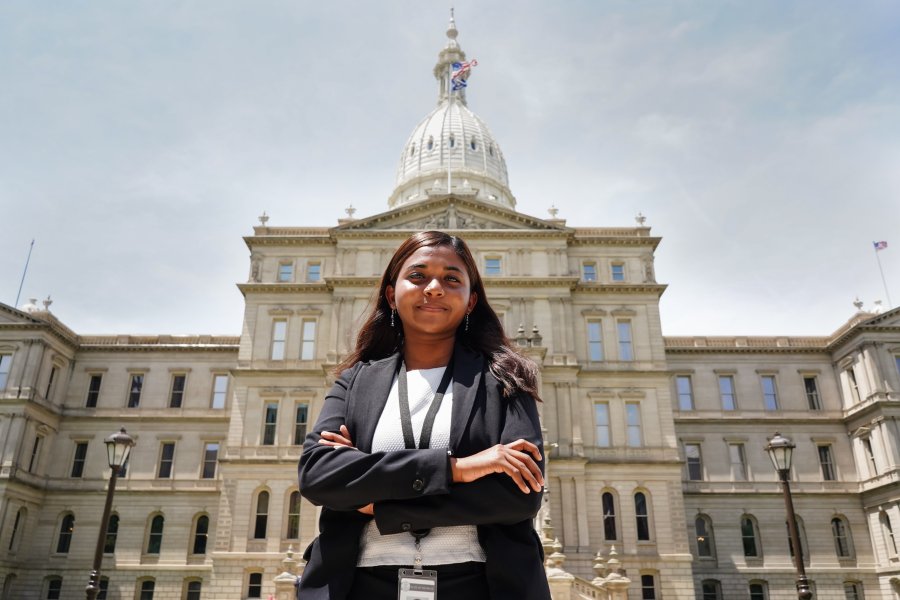
Capital Intern Program (Department of Political Science)
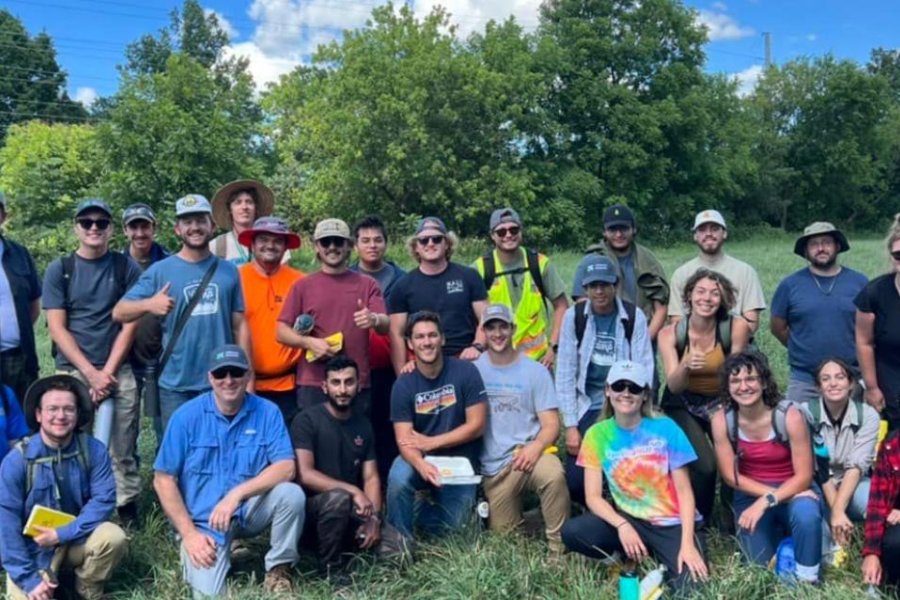
Hydrogeology Field Camp

WMU Archaeological Field School (Institute of Intercultural & Anthropological Studies)
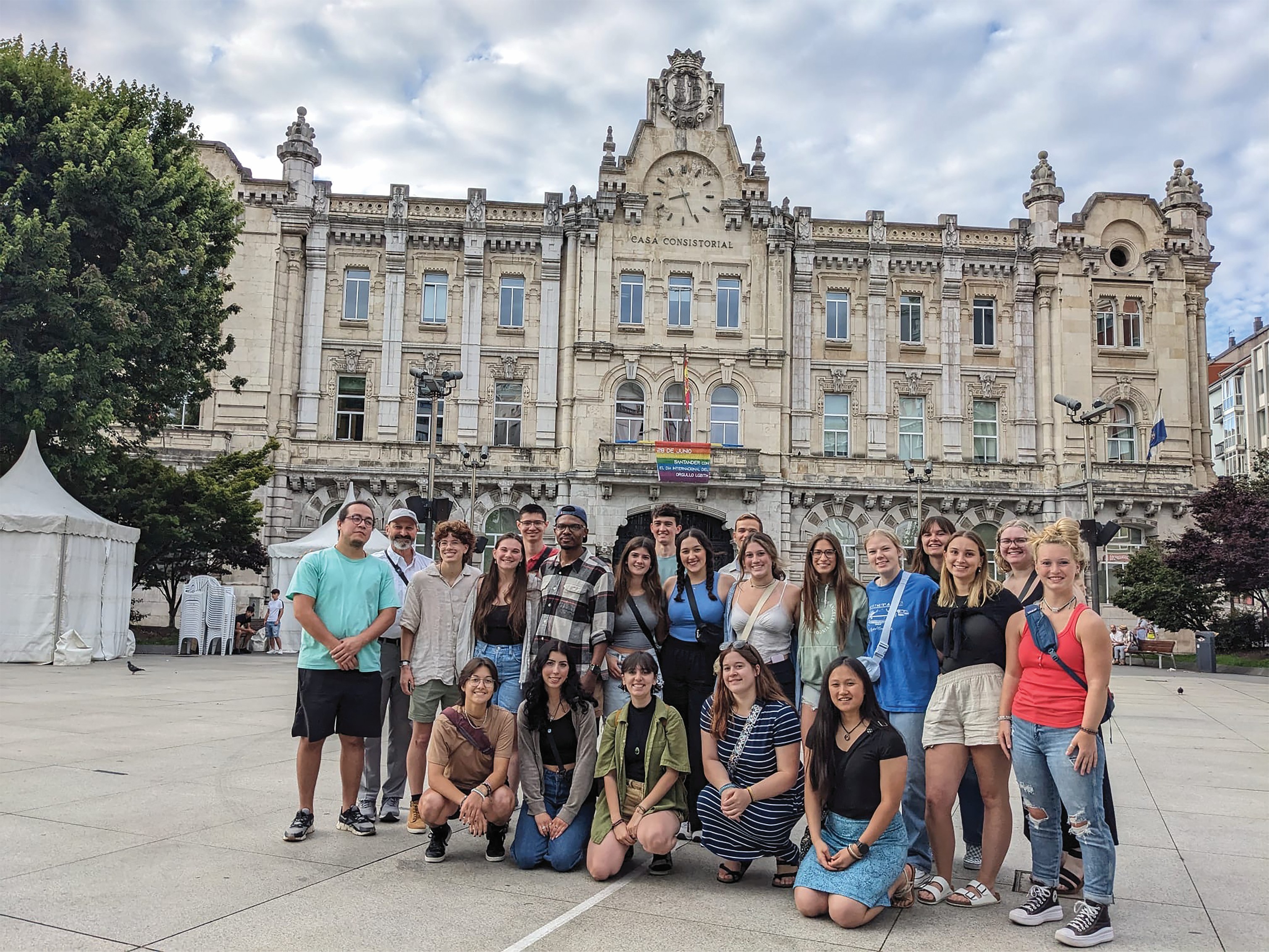
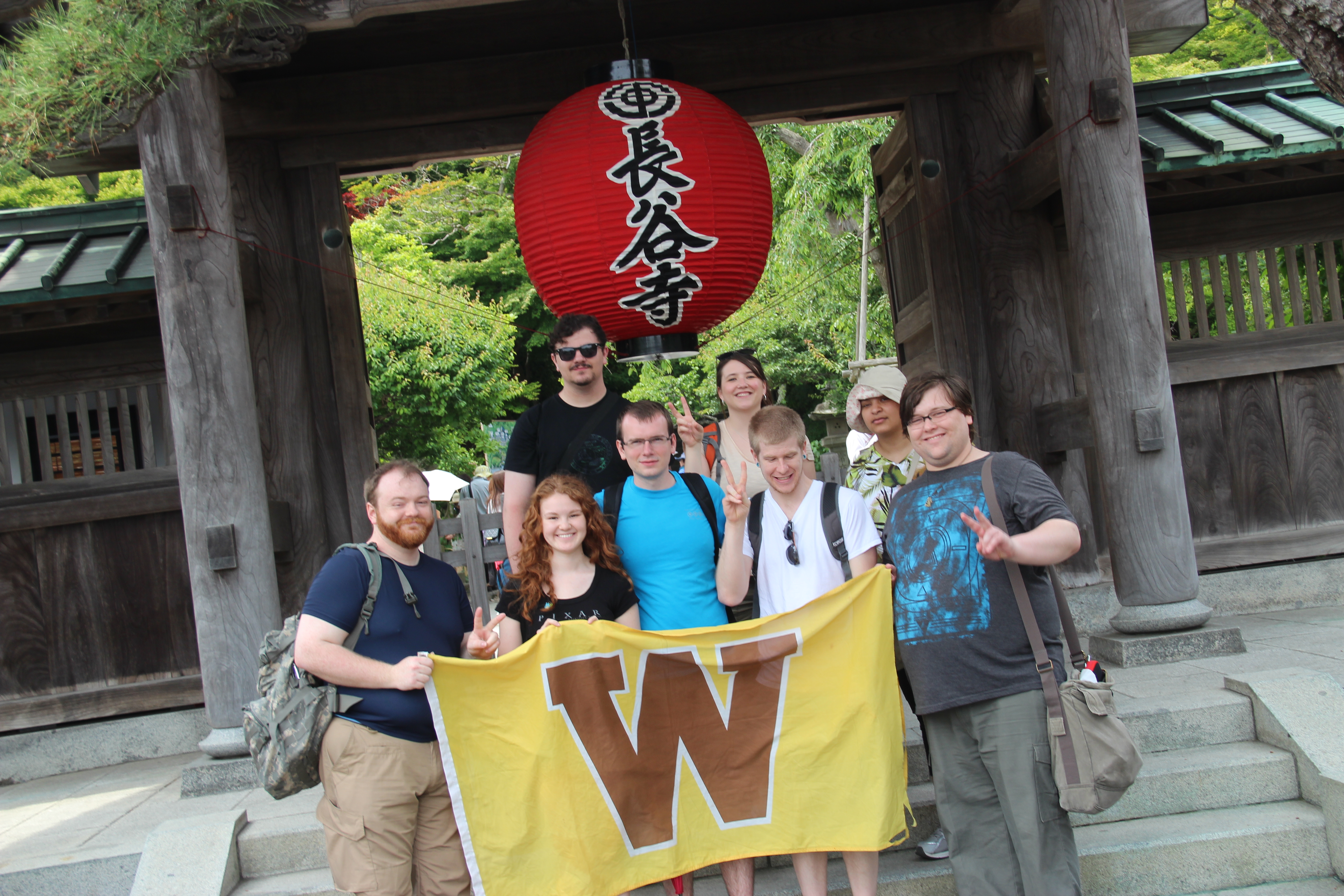
14 CAS Faculty-Led Study Abroad Trips (9 academic units)
Summer I:
Chinese Language & Culture: Hangzhou,China; World Languages & Literatures
Spanish: Quito, Ecuador; Spanish
Tropical Biology: Belize, BiologicalSciences/Environment, Geography &Sustainability
Religion & Culture in Japan: Japan; WorldReligions & Cultures
Culture, Communication & CommunityDevelopment: Tanzania, Communication
History & Cultural Immersion: Ghana;Intercultural & Anthropological Studies
Summer II:
Environmental & Cultural Studies:Lisbon, Portugal; Intercultural &Anthropological Studies/Environment,Geography & Sustainability
Culture, Social Problems & SocialChange: Lisbon, Portugal; Sociology
Media Ethics: London; Communication
Spanish: Santander, Spain; Spanish
Fall/Spring:
Spanish: Burgos, Spain; Spanish
Climate Action: Scotland;Political Science/Environment,Geography & Sustainability
Spanish: Costa Rica; Spanish
Economics in Our Daily Lives: Dominican Republic; Economics
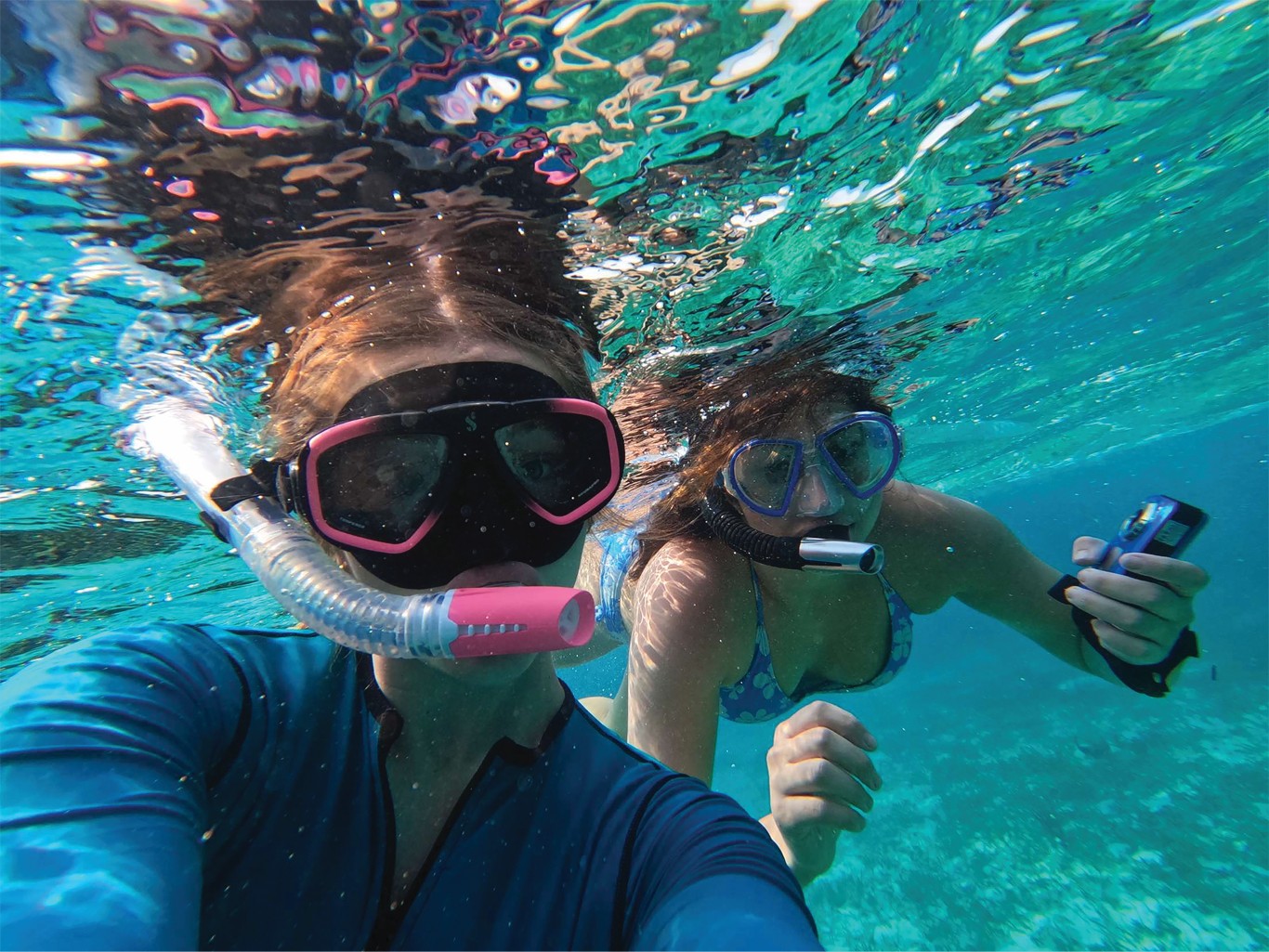
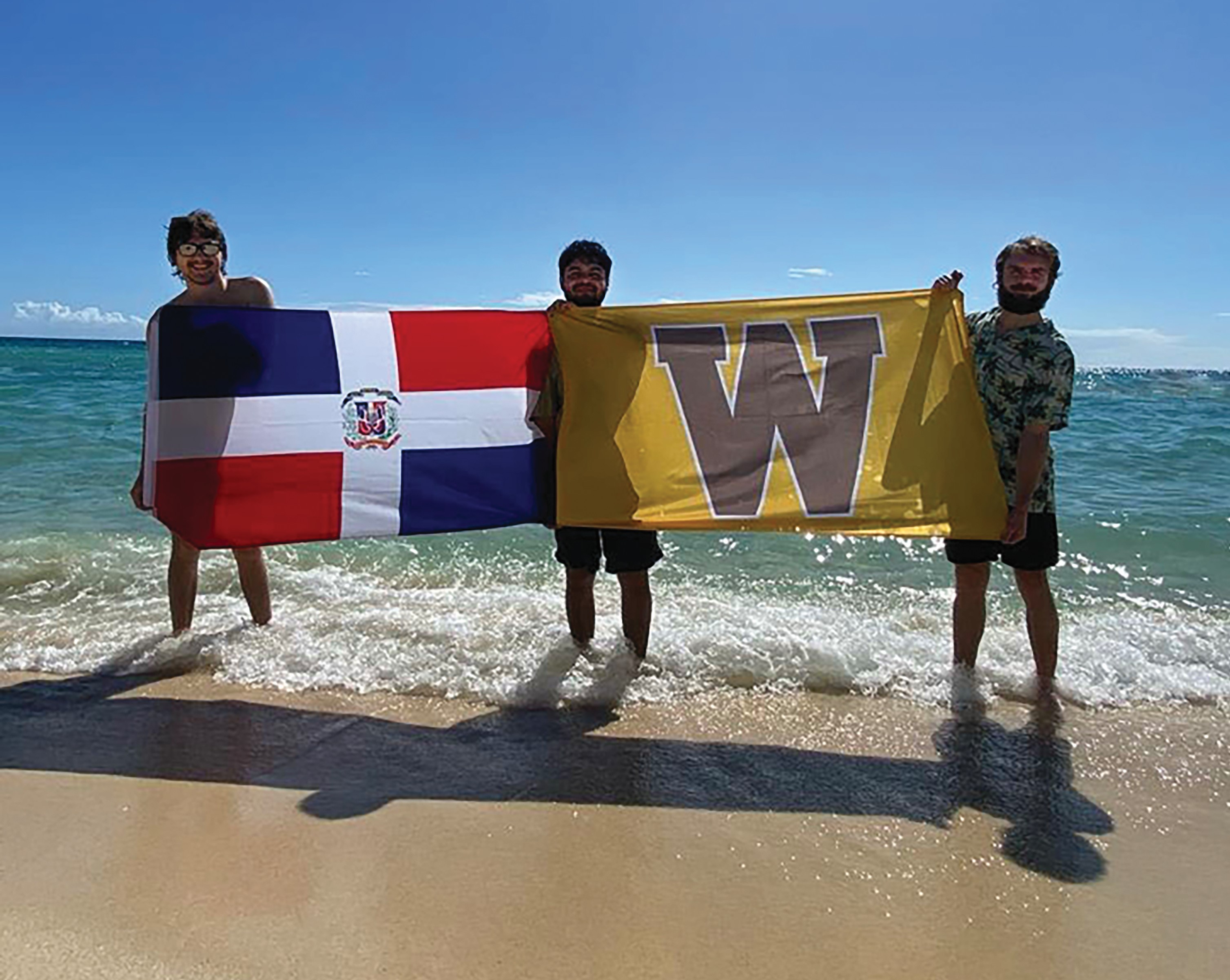
Can we formally include experiential learning into every College of Arts and Sciences program?
Thesis/dissertation research
Course-embedded undergraduate research experiences (CURES),undergraduate honors and thesis research
Faculty-led, course-based internship programs
Study abroad
Service-learning
Practicums, clinicals, internships
Research and Creative Activities
CAS Faculty Writing Circles
48 participants since initial launch in 2020
Proposal Writing Circles
2024-25: 9 participants, 3 funded proposals
CAS Summer Graduate Research Assistantships
Summer 2026
116 applications, 114 awards ($1K-5K; Avg = $4,296)
Awarded Units: Biological Sciences, Chemistry, Communication, Economics,English, Geological and Environmental Sciences, History, Mallinson Institute for Science Education, Mathematics, Interdisciplinary Doctoral Program,Philosophy, Physics, Political Science, Psychology, Public Affairs andAdministration, Sociology, Spanish, Statistics, World Religions and Cultures
Research, Innovation, and Creative Scholarship Week Celebration
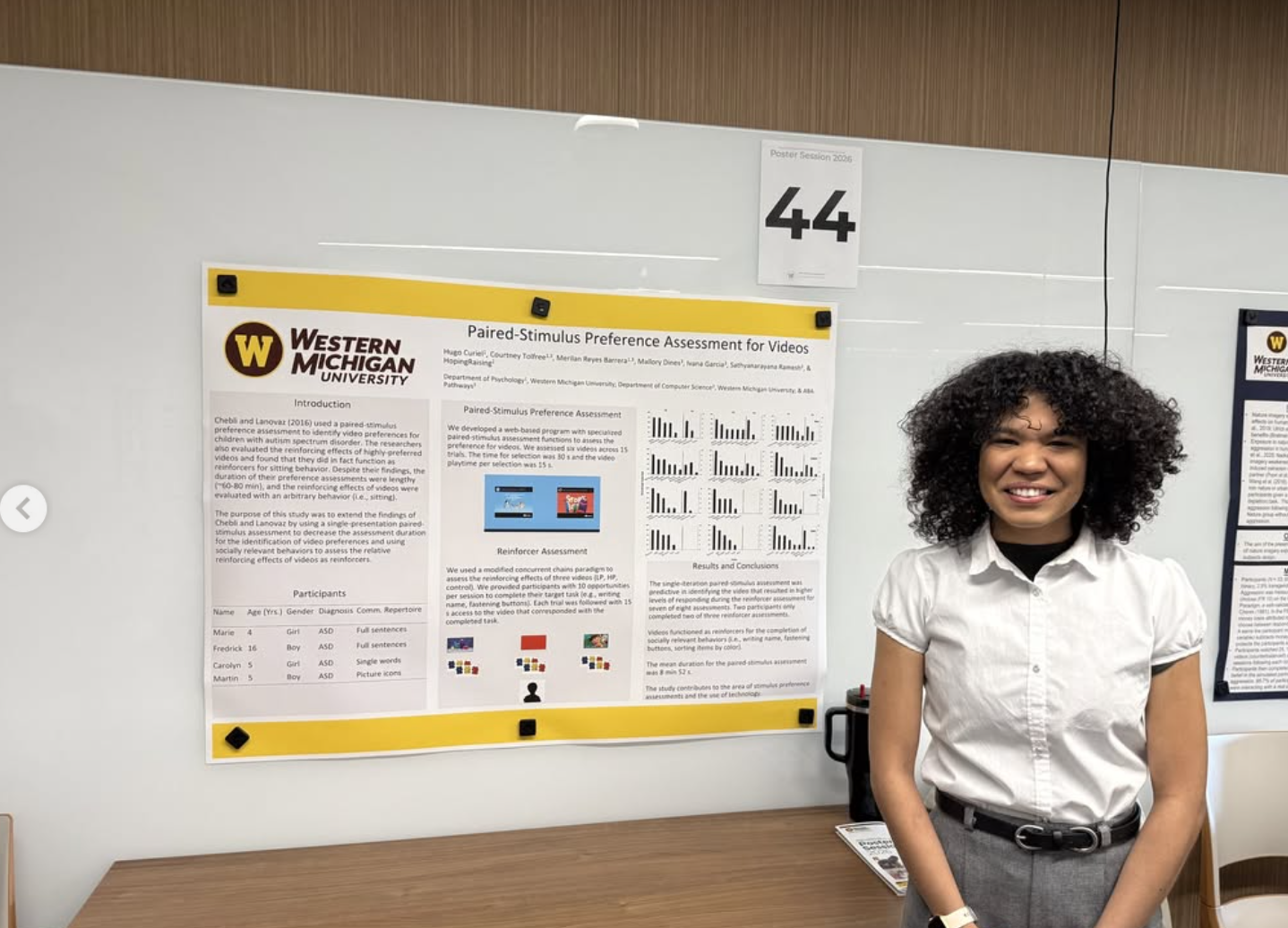
2025 CAS Poster Session: 57 Posters
2026 CAS Poster Session: 58 Posters
April 8, 4-6 pm, 3423/3433 Dunbar Hall
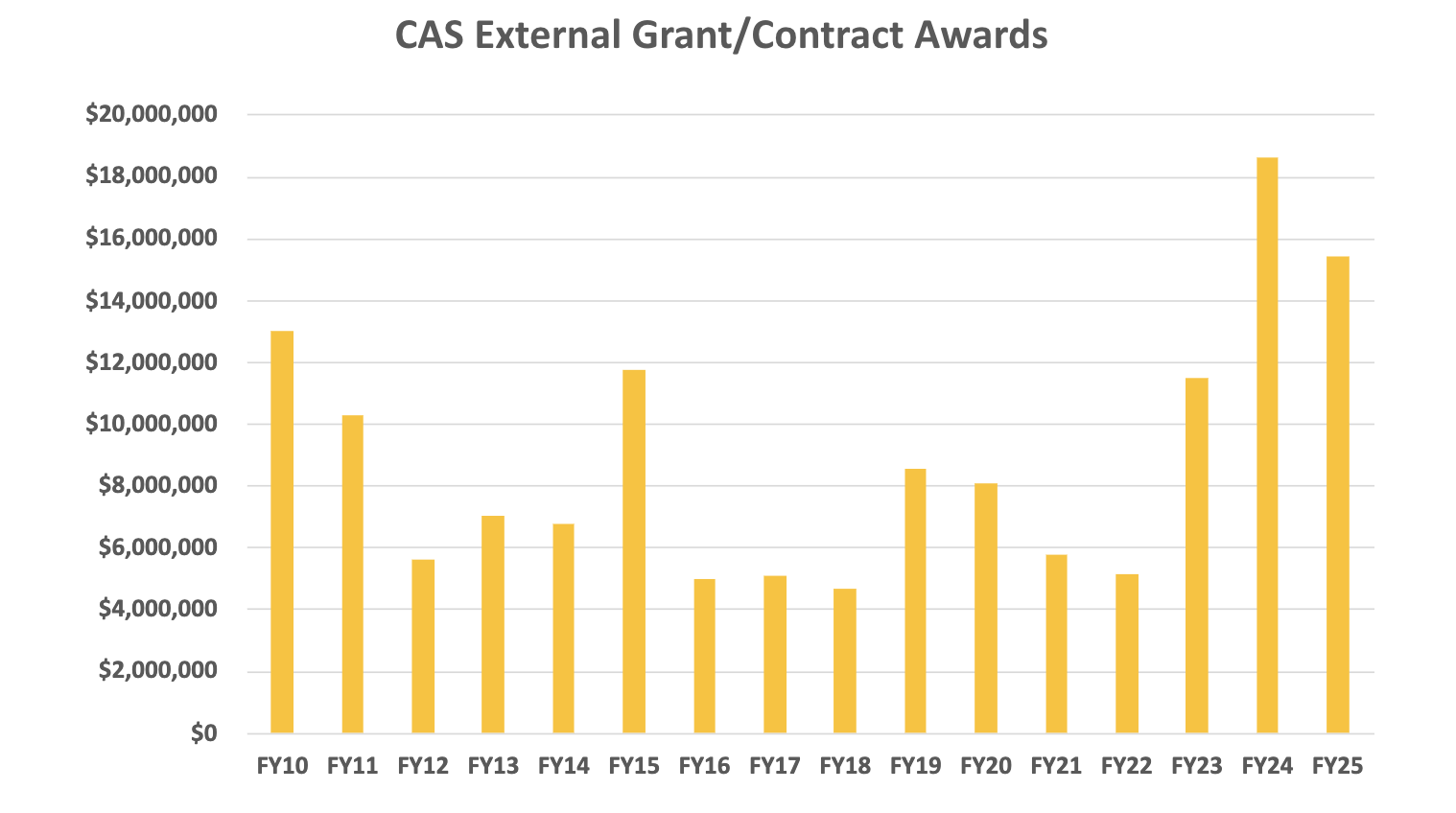
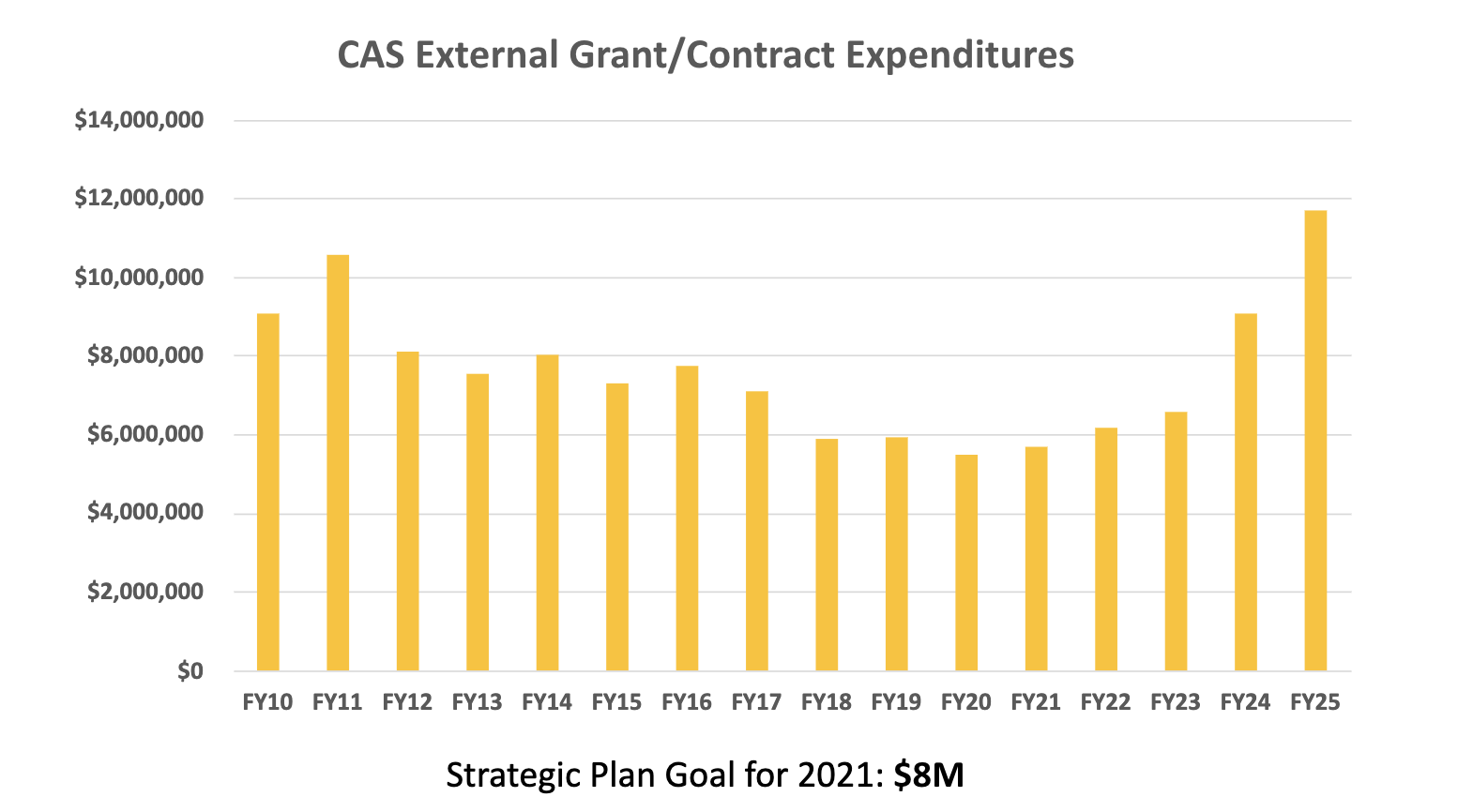
Are we going to be an R1?
Carnegie Classification Criteria for 2025 and beyond - based on prior year or 3-year rolling average (FY21-23 for 2025 Classifications)
≥$50M in total annual research expenditures ($5M for R2)
WMU: FY22-FY24: $39M avg; FY24 = $55M
≥70 research/scholarship doctorate degrees (PhD, EdD) per year (20 for R2)
WMU: FY22-FY24: 105 avg; FY24 = 100 (CAS, CEAS, CEHD, Grad College)
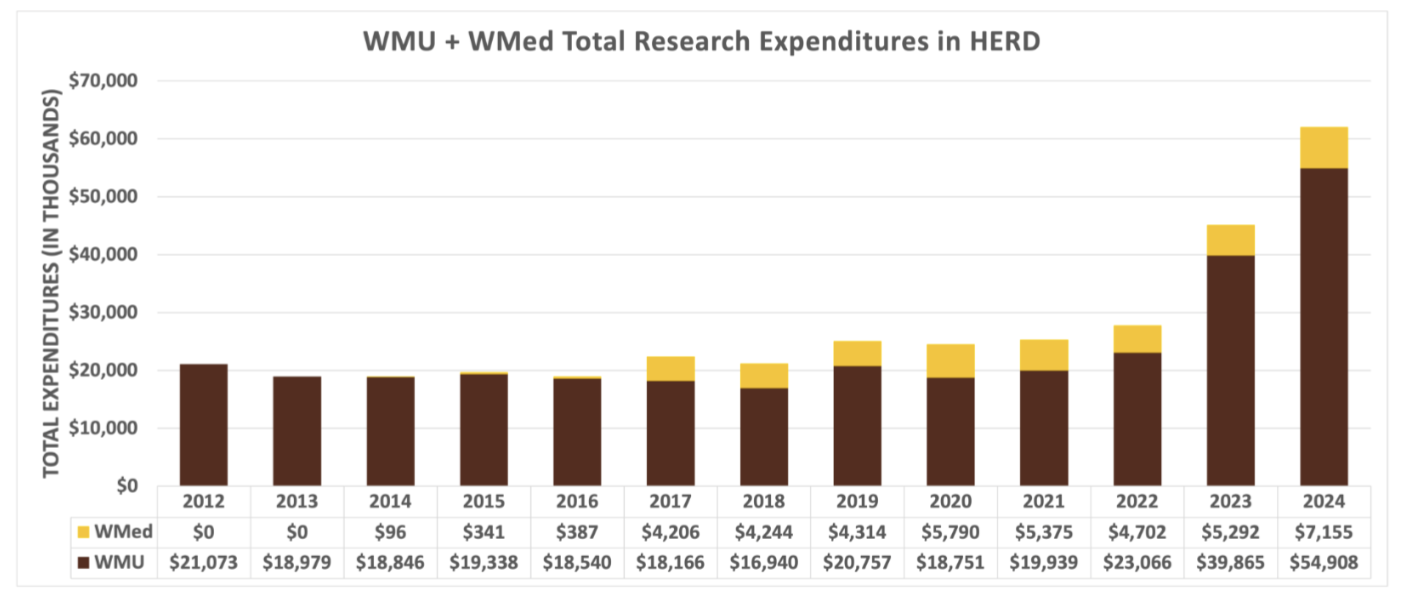
Faculty Senate ORI Presentation, Feb 5, 2026
Opportunities to expand research and creative activities?
Communication campaign focused on faculty/student research and creativeactivities
Networking events to identify and build collaborations in areas of excellence(relaunch CAS Research & Creative Activities Committee?)
Create and highlight an annual, college-wide research and creative activitiestheme
Collaborate with ORI to assemble interdisciplinary, multi-college and multi-institution teams to target very large external grant opportunities
Expanding Interdisciplinary Connections Across Academic Programs (CAS Strategic Plan Goal 1)
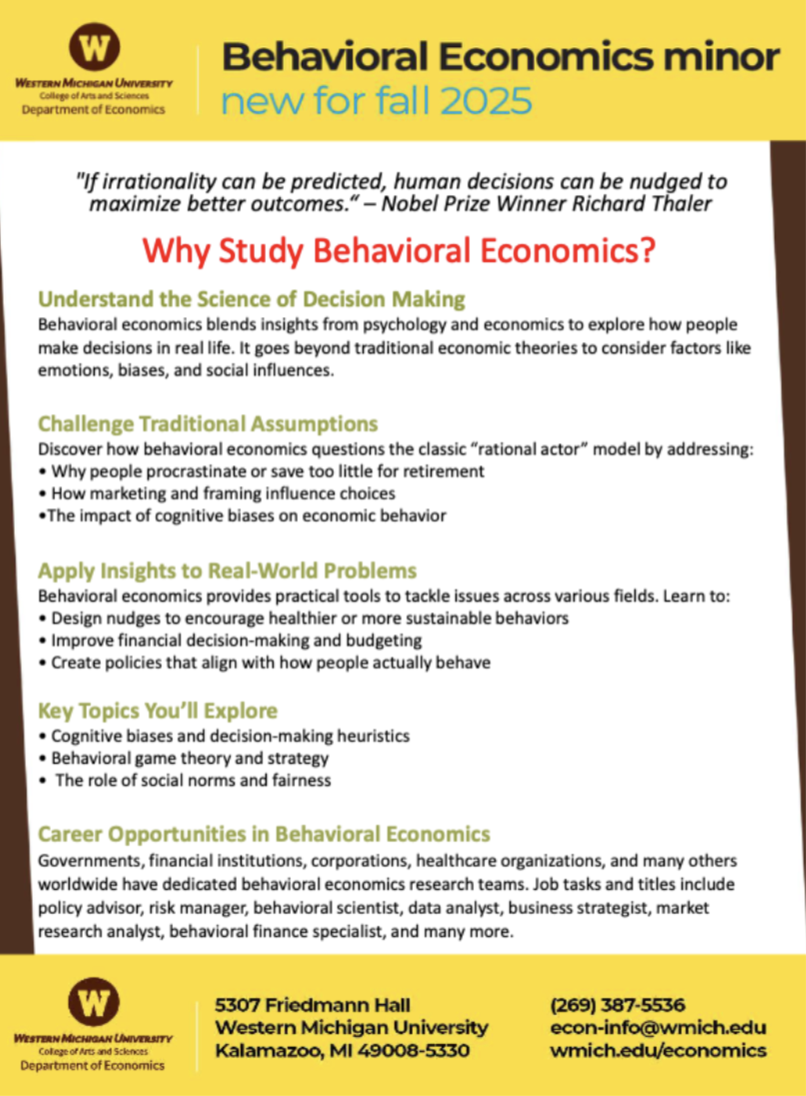
Behavioral Economics Minor
Joint initiative between Economics and Psychology Departments
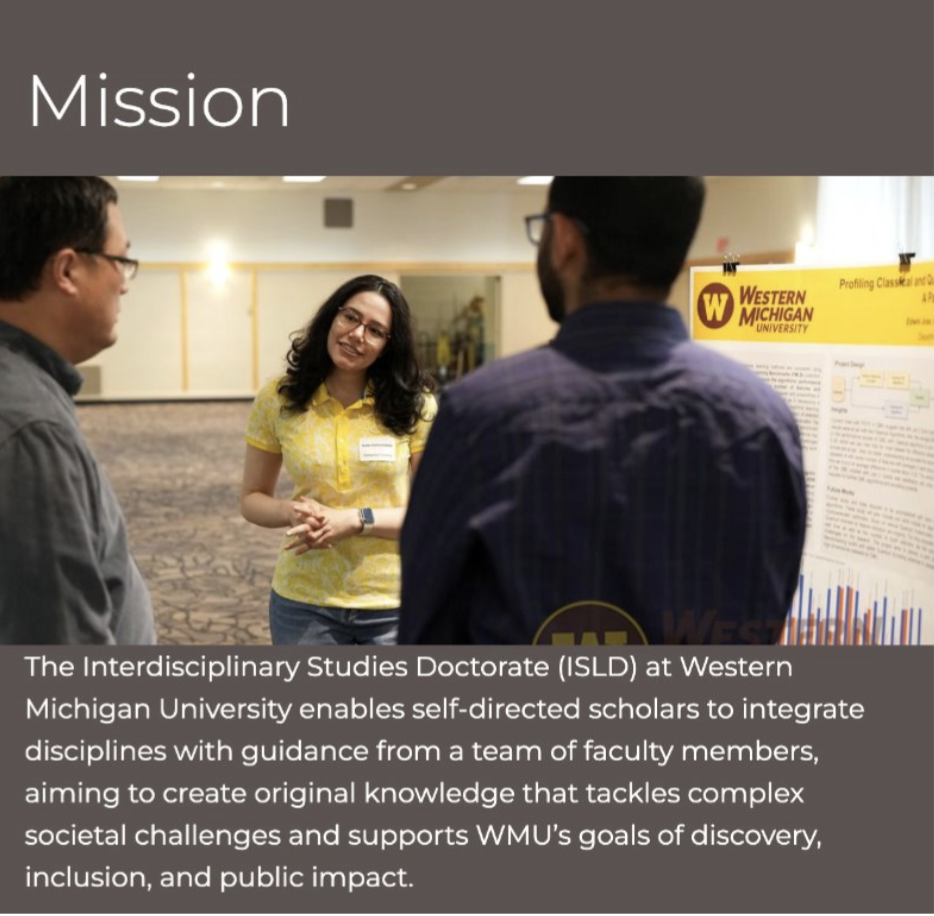
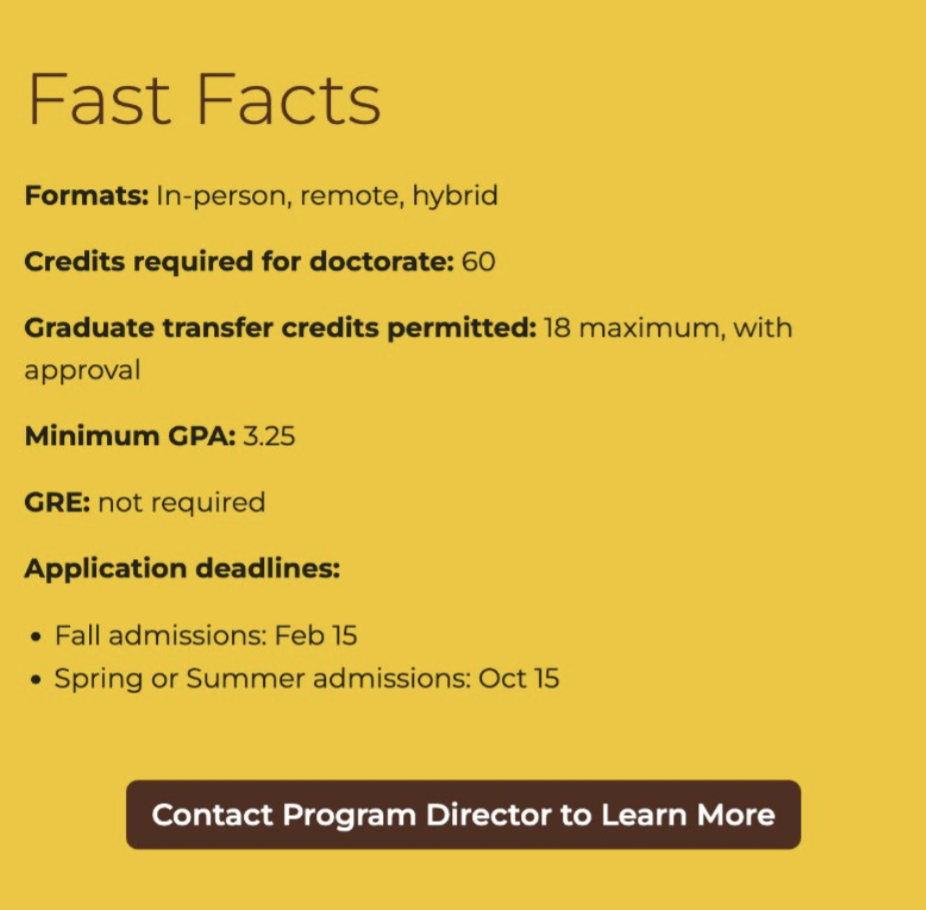
Interdisciplinary Doctoral Program
How can we connect across units to deliver outstanding instruction?
Explore opportunities to include existing courses in programs of study acrossacademic units
Develop interdisciplinary courses that serve students in multiple programs (e.g.,graduate courses focused on teaching pedagogy, grant/technical writing and/orresearch methods; shared FYE courses)
Develop and advertise WES Clusters
Develop and support interdisciplinary programs (e.g., environmental science; socialstudies, interdisciplinary doctoral program – explore master’s program)
Develop cross-listed and team-taught courses